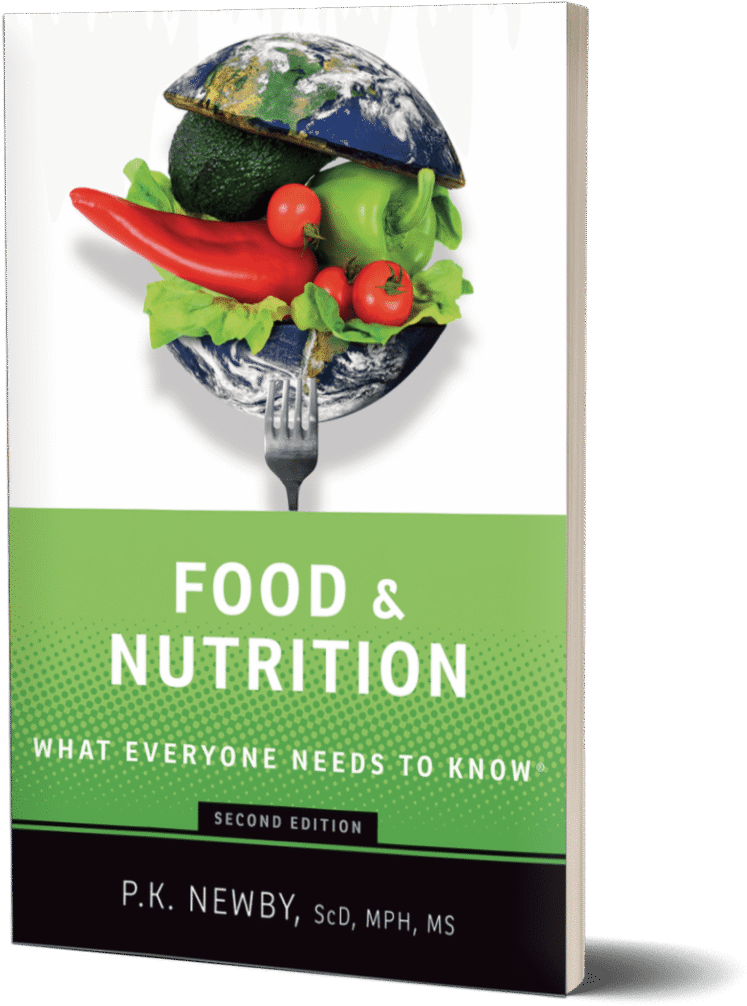

Not sure what to eat for health, longevity, and sustainability? Do you feel like diet advice is constantly changing, or yearn for evidence-based information but don’t know what to believe? You’re not alone. It’s not easy to sort fact from fiction given the epidemic of misinformation fueled by self-appointed gurus, Hollywood celebrities, personal trainers, social media influencers, snake oil salespeople, physicians with next to no training in nutrition, evangelical preachers, even world leaders . . . and your mother. Eaters hunger for answers, and science will happily provide them herein, but the din of junk diet advice is deafening—and it’s a big reason why so many are perplexed. Nutrition confusion runs rampant, and there is a vital need to bring science to the forefront of contemporary conversations, and it’s exactly what drives me to help savvy readers like you get the food facts.
The truth is that there is much more scientific consensus on diet, disease, and climate change than nay-sayers would have you believe. Did you know that at least 80% of heart attacks and strokes are preventable, as well as 40% of cancers? Or that almost 100% of obesity and type 2 diabetes are avoidable? And diet is one of the leading modifiable risk factors for all of them! Yet mistrust in science has risen since this book’s first release, alongside eroding faith in governmental organizations. Fear not, reader! In Food and Nutrition, we again journey through time and space, culture and place, where you’ll discover the powerful knowledge of how and why what we eat matters, farm to fork and far beyond. With this book as your trusty guide, obligatory bad food puns peppering your path to knowledge, you’ll finally bid farewell to nutrition nihilism for good.
The book, the first edition now published in Chinese and Turkish, is the culmination of decades of deep thinking about food in my career spanning the social, biological, and public health sciences, beginning with a 12-year academic marathon including a bachelor’s of science in social welfare concentrated on psychology and sociology; two masters degrees in public health and human nutrition; and a doctorate of science from Harvard focused on nutritional epidemiology and diet and disease prevention. I always wanted to be a scientist and professor (if not culinary goddess), and I leaned in hard. Several classes were life-changing—notably, the philosophy of science and the history of public health that permeate this work—but none more so than a course called Nutritional Ecology. It was the mid-1990s, and I was a bright-eyed graduate student at Columbia gobbling up every bit of knowledge I could about all the food things.
The class rocked my world (view), a Eureka! moment that indelibly changed my life—and altered the course of my calling. Nutrition ecology, a four-quadrant framework encompassing health, environment, society, and economy, became the organizing philosophy for the many courses I developed over the years at Harvard and elsewhere, working to change the paradigm of how we think about food and nutrition. The idea that food impacts far more than your own health, even our planet, is not new yet remains eye-opening for so many—and it’s finally catching on. My ardent hope is that this book does for you what that class did for me.
Much has changed dramatically since then, even from this book’s first release. We’re living in the wake of a global pandemic amid ongoing major geopolitical conflicts and massive zoonotic disease outbreaks—some of which you may not have heard about—yet it’s part of why your eggs are so expensive, and why hunger, food insecurity, and famine are all on the rise. One morsel of hope is that more eaters are taking a closer look at what’s on their plate and how it got there. There’s mounting awareness that our global agrifood system is a major culprit in our food polycrises—what I call agshittification—causing widespread damage to the air, land, and water necessary for the survival of our species and others. And fossil fuel-dependent, megafactory farming is a leading player in our climate change crisis and chronic disease epidemic, alongside intensifying antibiotic resistance that threatens our species and others.
This entirely updated and reorganized second edition meets the moment with the urgency it requires, digging even deeper into the global agrifood system with stand-alone questions that you can consider individually. Or you can read the book cover to cover, if you wish (which would be delightful given it’s “what everyone needs to know” and all). In these pages you’ll discover striking new data across the board, from plant-based diets, longevity, and sustainability to food and mental health, megafactory farming and climate change to ultra-processed foods and chronic disease. There’s even a plot (in a nonfiction kind of way), its surreal setting our own Age of the Chicken, our fossilized poultry-bone encrusted Earth, its landscape dotted with 26-foot high skyscrapers full of pigs and other grotesque Fourth Agricultural Revolution animal farms-cum-megafactories.
This is not hyperbole, it is our contemporary agrifood system—and one I couldn’t have imagined when I first glimpsed the future of food in Harvard’s Vision: Essays on our Collective Future in 2003. At the same time, mind-bending advances in science and technology still raise the same existential questions about the world we live in and where we’re headed as a species. My view is nevertheless the same now as it was then: Homo sapiens must embrace an ecotechno paradigm blending ecological ideals with technologic tools in order to create a healthy and sustainable food future here on Earth.
Yet the upsurge in misinformation and ongoing War on Science—now part of an even more nefarious War on Truth in America and elsewhere—compromises our collective ability to move forward, enlightened by facts. So you might stumble across data in this book that doesn’t fit your current views. In such cases, I respectfully request you to examine the source and basis of your opinions, open your mind, and perhaps heed the words of Yoda (if not me), who implores: “You must unlearn what you have learned.” (I’m pretty sure the sage Jedi Master of Star Wars was paraphrasing twentieth-century futurist Alvin Toffler—“The illiterate of the twenty-first century will not be those who cannot read and write, but those who cannot learn, unlearn, and relearn”—which is also spot-on in today’s information society.)
Because here's the thing: Science is not a system built on faith and unknowable truths. It is a systematic method of inquiry that over time, creates a rich body of information illuminating the way the world works. And it’s true whether you believe it or not. In the case of food and nutrition, this knowledge has the potential to save your life. I sincerely hope that this book answers your most pressing questions while also tuning you in and turning you on to all of the other food things happening that you may not have noticed. My ultimate dream, however, what drove my deep research, day in, day out, is that my book inspires you to take action: for your life, your loved ones, your community, and the shared planetary home we call Earth.
The fact is that our species has arrived at a critical turning point in human history, yet science and climate change denialism are on the rise. But the truth is out there, and in here, written in these way-too-many pages with as much wit as the subject provides (and colorful language, as my editor allows). Let there be no mistake: The food is now. And it is everyday eaters like you and me who create the future of food with each choice we make, every bite we take. Therefore I must—must!—believe that in a time not too distant from now, sapiens will have embraced practices that protect eaters, farmworkers, animals, and the only planet we (currently) inhabit. Will you add your voice to the growing chorus of individuals striving to create a healthy and sustainable food system not just for yourself, but for everyone and everything? Will you join in our crusade, in whatever ways you can?
Yet, as I complete this book with these (literal) last words, some sixteen months after I began writing, it’s clear that agrifood system transformation is just one of many changes we desperately need to move forward as a species, to evolve beyond the chicken age. Today’s food fight is situated within the larger context of sociopolitical upheaval and unrest, as ultrawealthy individuals in positions of power are placing profits over people while dismantling the evidence-based policies and regulations that have supported the extraordinary gains in health, disease prevention, and longevity humans have enjoyed over the past 100+ years—much of them rooted in science, technology, and the innovative human spirit.
But—as always—the revolution will not be televised.
So I must raise my voice even louder, hoisting the red flag of resistance ever higher, inviting you to the take your place at the table, together with me—while empowering you to seize the opportunity, with every meal, to create the world we wish to see.
Ready to pick up your fork?
—P. K. Newby, ScD, MPH, MS